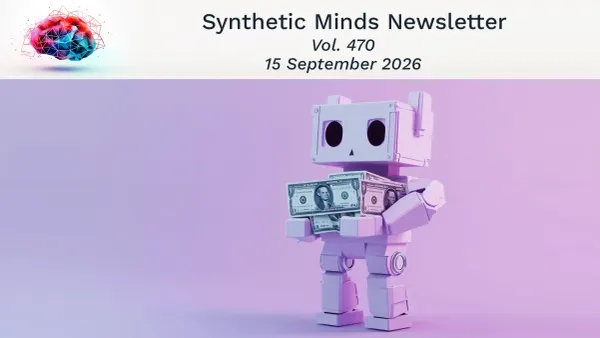
Synthetic Minds | The USA Is Writing the Rules of Digital Money

Synthetic Minds | The USA Is Writing the Rules of Digital Money
The Synthetic Minds newsletter offers short daily insights to get you thinking. If you enjoy it, please forward. All signals are powered by Futurwise. If you need more insights, subscribe to Futurwise and get 25% off for the first three months!
I built the Intelligence Age Scorecard! It will help you understand how ready your organization is for the Intelligence Age.
Today’s topic: Tokenization
Four US Regulators, One Digital-Money Rulebook
Money is defined by four questions. What it legally is. Who is allowed to issue it. Whether a bank can create it. Whether it counts as cash when a company holds it.
Four separate arms of the US government have answered all four.
Seen one at a time, these are routine agency filings. Seen together, they are the United States assembling the full legal machinery of digital money.
The securities regulator has proposed a standing rule for when a token counts as a security, and when it stops.
The Treasury has defined which dollar stablecoins are lawful to issue or sell, with a reach that covers any coin issued to a person located on US soil.
The bank supervisor has signaled that stablecoin issuance is coming inside the chartered banking system, with final rules due by autumn and dozens of charter applications already filed.
The accounting board has proposed letting companies book qualifying stablecoins as cash rather than as a volatile intangible.
And autonomous software has begun to settle real payments in those same dollar tokens, almost entirely in a single digital dollar.
That's the regulation story. Here is the signal.
This is not a crackdown. It is a definition.
For years the honest answer to "what is a digital dollar" was a shrug, and that shrug kept these instruments off the corporate balance sheet and out of the regulated bank. The shrug has ended.
The argument that the rest of the world built its financial rails without asking New York has found America's reply. It is not another rail. It is a rulebook, and because it reaches any dollar token issued to a person standing on US soil, a domestic rule becomes a global default.
That reach is the shadow. A bank in Singapore or Dubai that wants American users inherits American rules it never voted on, a dependency to design around, not a scandal to expose.
The opening is the larger truth. The doubt that kept digital dollars in a legal gray zone is closing.
A bank can issue one under a charter. A treasurer can hold one as cash and strengthen the balance sheet a lender reads. A machine can spend one inside a perimeter that finally exists.
The last time America decided what counts as money, the National Bank Act turned a patchwork of private notes into one national currency.
So the question your board should weigh is not who will police your tokens. It is which digital dollars you will hold, issue, and let your software spend, when they finally count as cash.
Other financial centers have built places for digital money to live. The United States has decided what that money is. One of those is far harder to copy.
The Intelligence Age Scorecard
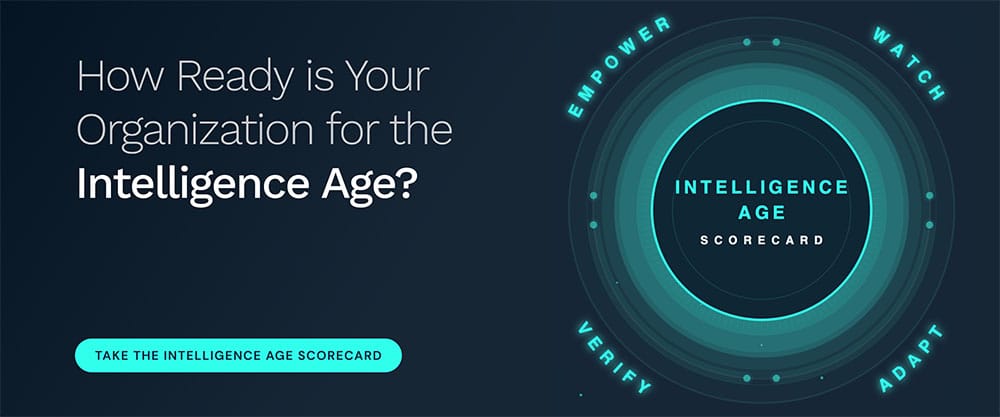
Four arms of the US government have defined what a digital dollar legally is, who may issue it, and whether it counts as cash, and software has started to spend it. WAVE, Watch, Adapt, Verify, Empower, asks which move the moment demands, and here it is Adapt: decide which digital dollars your treasury will hold and your systems will spend before the rules harden.
Benchmark your readiness for the next two quarters, and the next five years, with the Intelligence Age Scorecard.
If this newsletter was forwarded to you, you can sign up here.
Thank you.
Mark
Frequently asked questions
Which US agencies are shaping digital money rules?
Four separate arms of the US government have addressed digital money: the securities regulator, which proposed a rule for when a token counts as a security; the Treasury, which defined which dollar stablecoins are lawful to issue; the bank supervisor, which is bringing stablecoin issuance inside the chartered banking system; and the accounting board, which proposed letting companies book qualifying stablecoins as cash.
Link to this questionWhy does this regulatory activity matter for global finance?
It matters because the rules reach any dollar token issued to a person located on US soil, meaning a domestic rule effectively becomes a global default. A bank in Singapore or Dubai seeking American users inherits American rules it never voted on, turning a legal gray zone into a defined system that other financial centers cannot simply replicate by building their own rails.
Link to this questionDoes this mean digital dollars now count as cash?
The accounting board has proposed letting companies book qualifying stablecoins as cash rather than treating them as a volatile intangible asset. This is part of a broader shift where the previous shrug over what a digital dollar legally is has ended, allowing a treasurer to hold one as cash and strengthen the balance sheet a lender reads.
Link to this questionWhat should company boards do in response to these changes?
Boards should focus not on who will police their tokens, but on which digital dollars they will hold, issue, and let their software spend once those tokens officially count as cash. The suggested move is to adapt: decide on digital dollar strategy for treasury and systems before the rules fully harden.
Link to this question
Dr. Mark van Rijmenam
Dr. Mark van Rijmenam is The Digital Speaker, a world-leading futurist and global AI keynote speaker who helps leaders decide what AI, and the technologies that follow it, mean for their business. He speaks to leadership teams at their retreats and to conference audiences worldwide, and his WAVE framework gives them a way of deciding that they keep using long after he has left the room. His Intelligence Age Scorecard measures how ready an organization is across the four WAVE pillars.
He holds a PhD from the University of Technology Sydney, is a Certified Speaking Professional and Global Speaking Fellow, and ranks among the world’s top futurists on the Global Gurus list (#1 in 2025, #3 in 2026). Salesforce named him one of its 16 leading AI voices. He has written six books, most recently Now What? How to Ride the Tsunami of Change, writes the Synthetic Minds newsletter on Substack, and founded Futurwise. Talk to his digital twin on WhatsApp: +1 (830) 463-6967.