Synthetic Minds | Quantum Crossed From Science Project to Working Tool
Synthetic Minds | Quantum Crossed From Science Project to Working Tool
The Synthetic Minds newsletter offers short daily insights to get you thinking. If you enjoy it, please forward. All signals are powered by Futurwise. If you need more insights, subscribe to Futurwise and get 25% off for the first three months!
I built the Intelligence Age Scorecard! It will help you understand how ready your organization is for the Intelligence Age.
Today’s topic: Quantum Computing
Quantum Is Finally Ready to Go to Work
Quantum computing quietly crossed a line. A run of breakthroughs around the world, capped by the field's boldest claim, moved it from a spectacle you watch on a stage to an instrument you can put to work on a real problem.
The question stopped being how many qubits a machine can show off. It became whether quantum is cheap enough, stable enough, and trustworthy enough to earn a place in your toolkit. It has crossed that line.
D-Wave has shown a switch that makes fixing quantum errors roughly ten times cheaper, so a reliable machine needs far fewer qubits.
An Israeli firm has 3D-printed the wiring that stalls every quantum computer, letting a machine grow instead of choke.
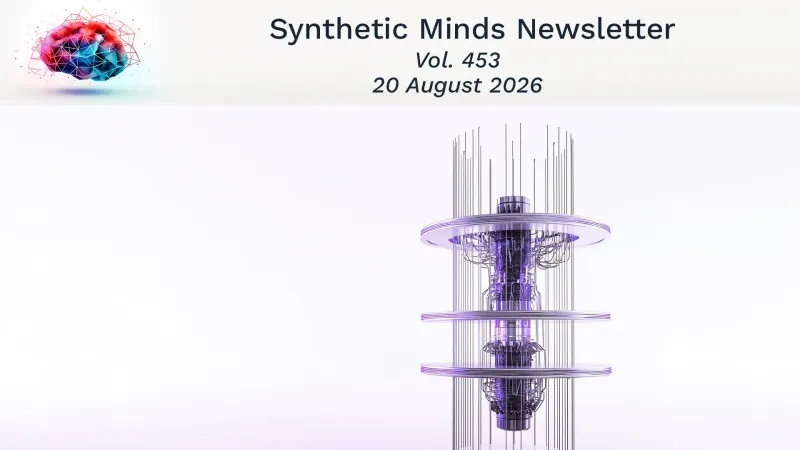
IBM has unveiled modular refrigerators that run over 180 times colder than deep space and link separate quantum chips through meter-long cables, the plumbing a fault-tolerant machine has always lacked.
A Chinese team has used AI to place more than two thousand atoms into a flawless grid, in a fraction of a heartbeat.
A Swiss university has folded a quantum machine into its supercomputer, reachable as an ordinary job in the queue, no physics doctorate required.
And IBM has claimed a quantum computer beat the best classical methods at a hard physics problem, then published it openly and invited anyone to check.
That's the hardware story. Here is the signal.
For years, quantum has been a promise you were told to wait for. That wait is ending, and it is ending in the least glamorous way possible: not with a bigger machine, but with the machine becoming usable.
Cheaper error correction means reliable answers without a warehouse of qubits. Solved wiring means the machine can actually scale. Modular refrigerators mean it can grow chip by chip instead of as one brittle giant. AI-built atom grids mean bigger, cleaner processors. Integration into everyday supercomputers means your team can reach one through tools they already know. And an advantage you can openly check means you no longer have to trust the inventor on their blue eyes.
Put those together and quantum stops being a science project. It becomes an instrument aimed at the problems that matter most: new medicines, better batteries, cleaner materials, tighter logistics, sharper risk models.
The locks the world rushed to build were bracing for the danger this technology poses. The quieter, bigger story is the good it can start to do.
Here is the opening. This advantage is not reserved for the labs that build the machines. It is available to any organization willing to name its hardest problem and put a verifiable, hybrid quantum-and-classical run against it. Treat early results as something to pressure-test, not gospel, and confidence compounds quickly.
So the question your board should sit with is not whether quantum is ready. It is which of your problems earns the right to go first.
The waiting game is over. The quantum decade will reward the organizations that stop watching qubit records and hand a machine their hardest problem, and the people who benefit will never need to see the wiring.
The Intelligence Age Scorecard

Quantum has crossed into usefulness: cheaper to run, stable enough to scale, and open to check. The WAVE framework (Watch, Adapt, Verify, Empower) asks whether you are still watching quantum from the sidelines or ready to empower a team to test it on one real problem.
Benchmark your readiness for the next two quarters, and the next five years, with the Intelligence Age Scorecard.
If this newsletter was forwarded to you, you can sign up here.
Thank you.
Mark
Frequently asked questions
What does it mean that quantum computing has crossed into usefulness?
It means quantum computing has moved from being a stage spectacle focused on qubit counts to becoming a practical instrument for real problems. The question is no longer how many qubits a machine has, but whether it is cheap enough, stable enough, and trustworthy enough to be used. A series of breakthroughs in error correction, wiring, cooling, atom placement, integration, and verified advantage have together crossed that line.
Link to this questionWhat breakthroughs made quantum computing more practical?
D-Wave created a switch making quantum error correction roughly ten times cheaper. An Israeli firm 3D-printed wiring that had stalled quantum computers from scaling. IBM unveiled modular refrigerators over 180 times colder than deep space, linked by meter-long cables. A Chinese team used AI to place more than two thousand atoms into a flawless grid quickly. A Swiss university integrated a quantum machine into its supercomputer as a standard job in the queue.
Link to this questionHow can organizations start using quantum computing today?
Organizations do not need to build their own quantum hardware to benefit. Any organization can name its hardest problem and run a verifiable, hybrid quantum-and-classical test against it. Early results should be treated as something to pressure-test rather than accepted as certain, since confidence in the technology compounds quickly once real problems are tested rather than watched from the sidelines.
Link to this questionWhy does verifiable quantum advantage matter?
IBM claimed a quantum computer beat the best classical methods at a hard physics problem and published the results openly, inviting anyone to check them. This matters because it means organizations no longer have to simply trust the claims of the machine's inventors. An openly checkable advantage builds real confidence that quantum computing can be relied upon for serious problems.
Link to this question
Dr Mark van Rijmenam
Dr. Mark van Rijmenam, widely known as The Digital Speaker, isn’t just a #1-ranked global futurist; he’s an Architect of Tomorrow who fuses visionary ideas with real-world ROI. As a global keynote speaker, Global Speaking Fellow, recognized Global Guru Futurist, and 5-time author, he ignites Fortune 500 leaders and governments worldwide to harness emerging tech for tangible growth.
Recognized by Salesforce as one of 16 must-know AI influencers , Dr. Mark brings a balanced, optimistic-dystopian edge to his insights—pushing boundaries without losing sight of ethical innovation. From pioneering the use of a digital twin to spearheading his next-gen media platform Futurwise, he doesn’t just talk about AI and the future—he lives it, inspiring audiences to take bold action. You can reach his digital twin via WhatsApp at: +1 (830) 463-6967.