Synthetic Minds | Your Money Is Turning Into Software Anyone Can Issue
Synthetic Minds | Your Money Is Turning Into Software Anyone Can Issue
The Synthetic Minds newsletter offers short daily insights to get you thinking. If you enjoy it, please forward. All signals are powered by Futurwise. If you need more insights, subscribe to Futurwise and get 25% off for the first three months!
I have just launched the Intelligence Age Scorecard! It will help you understand how ready your organization is for the Intelligence Age.
Today’s topic: Tokenization
Who Gets To Issue Your Money
A major European bank has turned the euro into something you can hold like a message; a token that moves in seconds, at any hour, across any border. It is real, regulated money, and it lives on a public network anyone can watch.
The money in your account is being rebuilt as software, and banks, tech giants, and governments are racing to be the one that issues it.
Crédit Agricole, one of Europe's biggest banks, has issued a euro you can hold as a token, digital cash, backed one-for-one by real euros, and used it to buy into an investment fund that lives on a public blockchain.
A European cash fund has moved onto that same kind of open network, paying out in digital dollars and usable as security for a loan.
More than 140 of the world's largest payment and finance names, including Visa, Mastercard, and BlackRock, have unveiled a shared digital dollar that no single company controls.
Hong Kong and Singapore's governments are building official rails to issue and settle these tokens as public infrastructure.
And tokenized versions of company shares trade around the clock in 120 countries, never closing for the night.
That's the tokenization story. Here is the signal.
For a century, money meant one thing. A government printed it, a bank kept it, and it rested until business hours. That arrangement is ending.
Money is becoming software that moves on its own. Issued by a bank, a club of companies, or a government. The upside is real: cash that settles in seconds, across borders.
The catch is quieter. Three questions come with every one of these new euros and dollars.
- Who issues it; a bank you can name, a company club, or a state? Each is a different promise.
- Who earns the interest? The cash behind these tokens earns money while it sits. In the old system that was your bank's, and indirectly yours; in the new, it flows to a consortium.
- And who catches it when it falls? The safeguards you never think about, deposit insurance, a bank you can phone, a central bank that halts a panic, were built for money that sits still. This kind moves at three in the morning, and can be issued by firms that are not banks.
The last time companies printed their own money, you had to know whose note you held. Not all were worth their face.
The question is not whether to touch digital money. It is whose rules protect the version you hold, and who pockets the interest that was yours.
Money used to be something you never had to think about. It is becoming something you have to choose. The name on it is about to matter again.
The Intelligence Age Scorecard
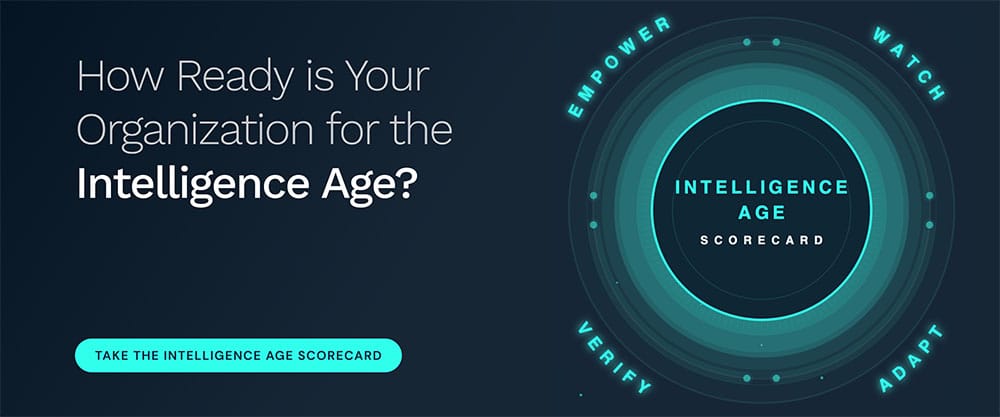
A European bank has issued a euro you hold as a token, a fund has moved onto a public blockchain, and 140 firms have unveiled a shared dollar. Everyday money is being rebuilt as software that a bank, a company, or a government can issue. That is a WAVE question — Watch, Adapt, Verify, Empower: are you still watching digital money as a curiosity, or should your treasury and risk teams already be adapting to a world where the cash you hold answers to different rules and different backers?
Benchmark your readiness for the next two quarters with the Intelligence Age Scorecard. Or read the public Intelligence Age Scorecard of IBM, Visa, Qantas, Woolworths, Telstra or Commonwealth Bank first.
If this newsletter was forwarded to you, you can sign up here.
Thank you.
Mark
Frequently asked questions
What does it mean that money is being tokenized?
It means everyday currency is being rebuilt as software, digital tokens that move like messages across borders in seconds, at any hour. These tokens are real, regulated money backed one-for-one, but instead of resting in a bank until business hours, they can be issued by a bank, a club of companies, or a government and move on public networks anyone can watch.
Link to this questionWho is currently issuing tokenized currency?
Crédit Agricole, one of Europe's biggest banks, has issued a euro token backed one-for-one by real euros. Separately, more than 140 major payment and finance names, including Visa, Mastercard, and BlackRock, have unveiled a shared digital dollar controlled by no single company. Hong Kong and Singapore's governments are also building official infrastructure to issue and settle these tokens.
Link to this questionWhy does it matter who earns interest on tokenized money?
The cash backing these tokens earns interest while it sits. In the traditional banking system that interest belonged to the bank and indirectly to the account holder. In the new tokenized system, that interest instead flows to whichever consortium or company issues the token, meaning money that was once yours in effect now benefits someone else.
Link to this questionWhat protections might be missing with tokenized money?
Traditional safeguards like deposit insurance, a bank you can phone, or a central bank that halts a panic were built for money that sits still during business hours. Tokenized money moves constantly, even at three in the morning, and can be issued by firms that aren't banks at all, meaning those familiar protections may not automatically apply to it.
Link to this question
Dr. Mark van Rijmenam
Dr. Mark van Rijmenam is The Digital Speaker, a world-leading futurist and global AI keynote speaker who helps leaders decide what AI, and the technologies that follow it, mean for their business. He speaks to leadership teams at their retreats and to conference audiences worldwide, and his WAVE framework gives them a way of deciding that they keep using long after he has left the room. His Intelligence Age Scorecard measures how ready an organization is across the four WAVE pillars.
He holds a PhD from the University of Technology Sydney, is a Certified Speaking Professional and Global Speaking Fellow, and ranks among the world’s top futurists on the Global Gurus list (#1 in 2025, #3 in 2026). Salesforce named him one of its 16 leading AI voices. He has written six books, most recently Now What? How to Ride the Tsunami of Change, writes the Synthetic Minds newsletter on Substack, and founded Futurwise. Talk to his digital twin on WhatsApp: +1 (830) 463-6967.