Synthetic Minds | The Immersive Stack Broke Into Pieces Anyone Can Use
Synthetic Minds | The Immersive Stack Broke Into Pieces Anyone Can Use
The Synthetic Minds newsletter offers short daily insights to get you thinking. If you enjoy it, please forward. All signals are powered by Futurwise. If you need more insights, subscribe to Futurwise and get 25% off for the first three months!
I built the Intelligence Age Scorecard! It will help you understand how ready your organization is for the Intelligence Age.
Today’s topic: Spatial Intelligence
Nobody Owns the Immersive Stack Anymore
A school moved its entire library of virtual lessons onto a different platform and kept every piece of it. That is one customer, and moving work between these systems is not easy at all.
What changed is not portability. It is that the stack of immersive experiences has stopped being one company, which is the thing Meta spent a decade trying to be.
World Labs has released Atlas, a model that builds three-dimensional space from photographs. The company calls it the thing that will power its own products rather than a product.
Optima has completed the move of its immersive lesson library onto Arthur, an AI-powered spatial platform. It keeps its content and chooses which AI runs inside each lesson.
ENGAGE XR is being liquidated after its largest customer said it would take no more licenses, with shares suspended and shareholders expecting nothing.
HTC has opened orders for camera glasses on three continents and published the interfaces that let other people's software reach the lens and the microphone.
That is the spatial intelligence story. Here is the signal.
Meta wanted to own all of it. The headset, the platform, the worlds inside it, the store that sold them, and it spent $70 billion to achieve it. That is not what is being built.
The model that generates three-dimensional space comes from one company. The platform hosting the lessons comes from another. The glasses come from a third, and they hand the lens to software their maker did not write.
One customer moved its content and kept it. That is one customer. Moving work across these systems is not easy at all, and a single migration is not proof that it is, but it does point to a signal worth paying attention to.
The interesting part sits elsewhere. More companies can contribute to a phygital world, where the physical and the digital are the same place. That holds as long as they know how to talk to each other.
Whether they can is not a given. There is no evidence yet either way, and the gap is worth exploring rather than assuming.
A cost sits underneath all of it. The risk of a technology disappearing, or no longer working, when the company behind it goes bankrupt is real. We have seen it in robotics.
ENGAGE XR has not said how long its service stays up or what happens to existing content. Its remaining customers are learning what was never in their contract.
So the question a company should ask before it builds on a technology is how it prepares for that technology going away.
Safeguards belong before the implementation, not after the failure. The risk worth understanding first is not that the tool breaks. It is that the company behind it stops existing.
The Intelligence Age Scorecard
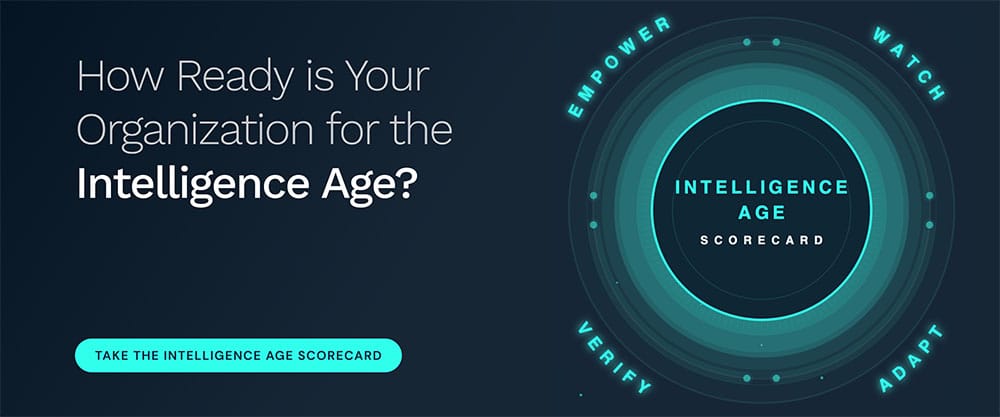
The immersive stack has stopped being one company's to own, and one of the suppliers assembling it has gone into liquidation with customer content still inside. In the WAVE framework (Watch, Adapt, Verify, Empower), that is a Verify-to-Empower moment: have you established what happens to your work if the company behind your technology disappears, before you implement it rather than after?
Benchmark your readiness for the next two quarters, and the next five years, with the Intelligence Age Scorecard.
If this newsletter was forwarded to you, you can sign up here.
Thank you.
Mark
Frequently asked questions
Why is the immersive stack no longer owned by one company?
The immersive stack now consists of separate companies handling different layers instead of a single owner. The model that generates three-dimensional space comes from one company, the platform hosting lessons comes from another, and the glasses come from a third, which hands the lens to software their maker did not write. This is different from Meta's decade-long attempt to own the headset, platform, worlds, and store together.
Link to this questionWhat happened with Optima moving its content to Arthur?
Optima completed moving its entire library of virtual lessons onto Arthur, an AI-powered spatial platform, and kept every piece of its content. It now chooses which AI runs inside each lesson. This is one example of a customer moving work between systems, though such migration is generally not easy and this single case is not proof it is.
Link to this questionWhat is happening to ENGAGE XR and its customers?
ENGAGE XR is being liquidated after its largest customer said it would take no more licenses, leading to shares being suspended and shareholders expecting nothing. The company has not said how long its service will stay up or what happens to existing content, leaving its remaining customers uncertain about content they still have stored inside the platform.
Link to this questionWhat should companies check before building on a new technology?
Companies should establish what happens to their work if the company behind a technology disappears, and they should do this before implementing the technology rather than after it fails. The real risk is not that a tool breaks, but that the company behind it stops existing, so safeguards need to be built in ahead of time, as seen in robotics and now with ENGAGE XR's liquidation.
Link to this question
Dr. Mark van Rijmenam
Dr. Mark van Rijmenam is The Digital Speaker, a world-leading futurist and global AI keynote speaker who helps leaders decide what AI, and the technologies that follow it, mean for their business. He speaks to leadership teams at their retreats and to conference audiences worldwide, and his WAVE framework gives them a way of deciding that they keep using long after he has left the room. His Intelligence Age Scorecard measures how ready an organization is across the four WAVE pillars.
He holds a PhD from the University of Technology Sydney, is a Certified Speaking Professional and Global Speaking Fellow, and ranks among the world’s top futurists on the Global Gurus list (#1 in 2025, #3 in 2026). Salesforce named him one of its 16 leading AI voices. He has written six books, most recently Now What? How to Ride the Tsunami of Change, writes the Synthetic Minds newsletter on Substack, and founded Futurwise. Talk to his digital twin on WhatsApp: +1 (830) 463-6967.