Synthetic Minds | The Climate Advantage Is No Longer Who Can Afford It
Synthetic Minds | The Climate Advantage Is No Longer Who Can Afford It
The Synthetic Minds newsletter offers short daily insights to get you thinking. If you enjoy it, please forward. All signals are powered by Futurwise. If you need more insights, subscribe to Futurwise and get 25% off for the first three months!
I built the Intelligence Age Scorecard! It will help you understand how ready your organization is for the Intelligence Age.
Today’s topic: Climate & Energy
An Extra Day of Warning, Given Away Free
A weather model worth a decade of forecasting progress has been handed to every weather service on earth for free. It buys roughly one extra day of warning before a cyclone makes landfall.
Set it beside a family cheesemaker cutting six figures off its energy bill, and robots cleaning solar farms, and one shift comes into view: the tools to face climate risk are decoupling from wealth.
Google DeepMind has open-sourced a cyclone-forecasting model after a result in Nature, reaching what the company calls leading accuracy on a storm's track, intensity and wind structure.
It runs a thousand possible storms at once, and has been released free to the global research community.
A family cheesemaker has cut over $90,000 a year from its bills with a heat pump that cools its milk and reuses the warmth in the process.
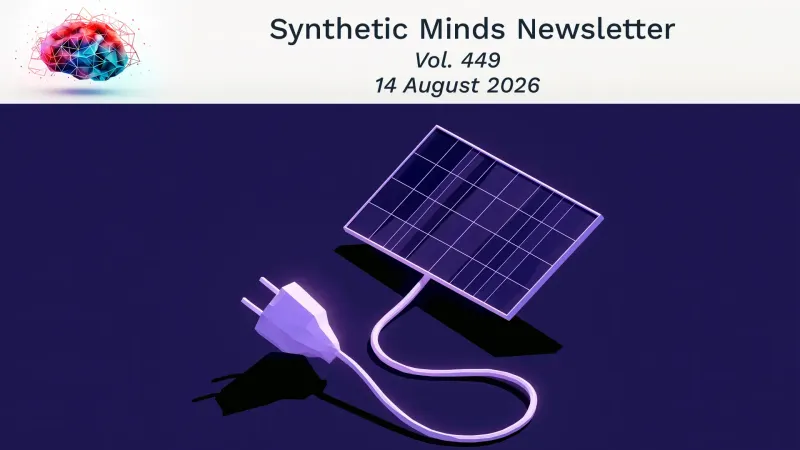
Half a world away, autonomous robots install vast solar arrays faster than any human crew. Self-powered machines clean the panels without crews or water, stripping out the cost that once gated utility-scale solar.
The wave carries a shadow too: the AI boom driving this progress is straining the very grids it promises to clean.
And the next capability is forming in quantum chemistry, still a proof of concept, aimed at cleaner catalysts and batteries.
That's the forecasting story. Here is the signal.
For years, the advantage in climate went to whoever could afford the instrument. The best model, the best forecast, the best hardware sat behind a national budget or a corporate balance sheet.
That gate has come off its hinges.
A forecasting model worth a decade of progress has been given away, so an extra day of warning belongs to more than a wealthy state. A day is the distance between an orderly evacuation and a casualty count. Efficiency hardware that once demanded a corporate treasury pencils out for the oldest cheddar-maker in the world.
The move that turned climate repair into a design problem inside well-funded labs named what became possible. This is the next chapter: the frontier itself has been pushed outward, into hands that could never have built it.
The catch is quiet, and it deserves care. A public good that runs on private rails is still governed by whoever owns the rails. The lab that gave the model away also sets its updates, its terms, and the price of everything built on top of it.
But the headline is the opening. A regional utility, a mid-market manufacturer, a national weather service can reach for capability they could never have developed alone. The first movers who wire it into how they warn, plan and operate capture the value before it is priced in.
So the question a board should carry is not whether to trust the forecast. It is what to build in the extra day, once everyone holds it.
For a century, the edge went to whoever could afford to see what was coming. The seeing has been handed outward; the edge is what you do with the day it buys.
The Intelligence Age Scorecard
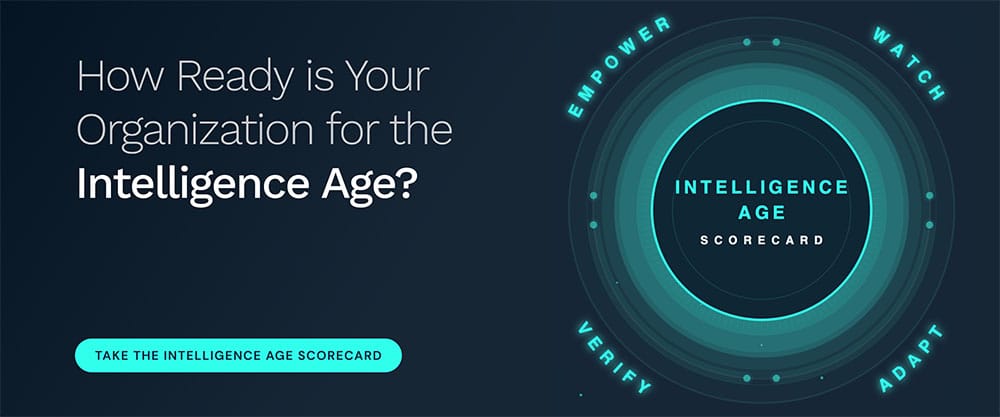
Frontier climate forecasting has been handed to the world for free, and efficiency hardware has started paying for itself, so the advantage has moved from who can afford the tool to who moves first to build on it. Under the WAVE Framework (Watch, Adapt, Verify, Empower), this is an Adapt moment: the capability is already in reach, and the question is whether your strategy has caught up.
Benchmark your readiness for the next two quarters, and the next five years, with the Intelligence Age Scorecard. Or read the public Intelligence Age Scorecard of Verizon, Accenture, IBM, Visa, Qantas, Woolworths, Telstra or Commonwealth Bank first.
If this newsletter was forwarded to you, you can sign up here.
Thank you.
Mark
Frequently asked questions
What did Google DeepMind release for free in cyclone forecasting?
Google DeepMind open-sourced a cyclone-forecasting model, following a result published in Nature, that reaches leading accuracy on a storm's track, intensity and wind structure. It can run a thousand possible storms at once and has been released free to the global research community, giving weather services roughly one extra day of warning before a cyclone makes landfall.
Link to this questionHow much has the cheesemaker saved using a heat pump?
A family cheesemaker has cut over $90,000 a year from its bills by installing a heat pump that cools its milk and reuses the resulting warmth elsewhere in the production process, showing how efficiency hardware that once required a corporate treasury can now pay for itself for smaller businesses.
Link to this questionWhat is the risk of relying on a free but privately owned forecasting model?
Even though the forecasting model is a public good, it still runs on private infrastructure controlled by the lab that created it. That lab sets the updates, the terms of use, and the price of anything built on top of the model, meaning access can be free while control remains concentrated in private hands.
Link to this questionWhy does the article say the climate advantage has shifted?
For years, climate advantage belonged to whoever could afford the best instruments, forecasts, or hardware, gated behind national budgets or corporate balance sheets. Now that a decade's worth of forecasting progress and efficiency hardware have become accessible to smaller players, the advantage has moved from who can afford the tool to who moves first to put it to use.
Link to this question
Dr. Mark van Rijmenam
Dr. Mark van Rijmenam is The Digital Speaker, a world-leading futurist and global AI keynote speaker who helps leaders decide what AI, and the technologies that follow it, mean for their business. He speaks to leadership teams at their retreats and to conference audiences worldwide, and his WAVE framework gives them a way of deciding that they keep using long after he has left the room. His Intelligence Age Scorecard measures how ready an organization is across the four WAVE pillars.
He holds a PhD from the University of Technology Sydney, is a Certified Speaking Professional and Global Speaking Fellow, and ranks among the world’s top futurists on the Global Gurus list (#1 in 2025, #3 in 2026). Salesforce named him one of its 16 leading AI voices. He has written six books, most recently Now What? How to Ride the Tsunami of Change, writes the Synthetic Minds newsletter on Substack, and founded Futurwise. Talk to his digital twin on WhatsApp: +1 (830) 463-6967.