Synthetic Minds | When Physical Labor Becomes Software

Synthetic minds is evolving. Short bi-weekly insights to get you thinking. If you enjoy it, please forward. If you need more insights, subscribe to Futurwise and get 25% off for the first three months!
When Physical Labor Becomes Software
The future is here. Boston Dynamics didn’t just release a better robot. They crossed a line I describe in 𝗡𝗼𝘄 𝗪𝗵𝗮𝘁? as inevitable: the moment physical labor stops being human by default and becomes programmable.
Atlas is no longer a lab curiosity or a PR stunt. It lifts heavy loads, assembles cars, navigates safely around people, runs continuously, and updates its skills like software. Same body. Different task. Learn once, deploy everywhere, 24/7. That is not automation. That is intelligence with a body.
In my book, I argue that robotics becomes truly disruptive when machines adapt to our world instead of forcing us to redesign everything around them. Atlas does exactly that. No bespoke factory layouts. No robot-only zones. The environment stays human. The worker changes.
Now let's zoom out.
Imagine millions of Atlas-class robots operating across thousands of factories, warehouses, and logistics hubs. Add the fixed industrial robots already deployed worldwide. Every movement, every failure, every micro-optimization becomes training data. Not just for one machine, but for the entire fleet.
This is where the curve bends sharply upward.
When those embodied systems feed into shared world models, reality itself becomes the training ground. Factories turn into sensors. Supply chains become simulators. The physical world becomes a continuously updating dataset. And once that loop closes, the future no longer arrives in generations. It arrives in versions.
Annual upgrades at first. Then quarterly. Eventually continuous.
That is the moment physical labor becomes software at planetary scale.
Productivity decouples from hiring. Skills propagate instantly. Capabilities compound without fatigue, negotiation, or forgetting. The workforce does not disappear, but it splits: those who design, govern, and collaborate with machines, and those who compete with them directly.
The uncomfortable truth is this: we are not automating tasks anymore. We are automating capability. And once capability becomes software, it compounds.
This is the part many leaders still underestimate. This is not about robots taking jobs. It is about work changing state. In 𝗡𝗼𝘄 𝗪𝗵𝗮𝘁?, I warn that societies treating robotics as a cost-saving tool will fracture. Those treating it as shared infrastructure can still thrive.
The future this unlocks is extraordinary. Safer work. Abundant production. Faster innovation. But it is arriving like a bullet train. Fascinating, exhilarating, and unforgiving to anyone still standing on the platform debating whether it is real.
Atlas is not the end of the story. It is the moment the story becomes irreversible.

'Synthetic Minds' continues to reflect the synthetic forces reshaping our world. Quick, curated insights to feed your quest for a better understanding of our evolving synthetic future, powered by Futurwise:
1. BYD's EVs are taking over the market, as they build a new car every 52 seconds! In a rapidly evolving industry, BYD's electric vehicle empire is rising to the top, but at what cost? (AFR)
2. The internet is about to get a new backbone, and it's not Big Tech's cloud, it's DePIN. Get ready for a programmable, verifiable, and borderless financial system. (Crypto.News)
3. A new lawsuit against OpenAI alleges that ChatGPT fueled the murder-suicide of Stein-Erik Soelberg and his mother, raising concerns about AI safety and the potential risks of AI-powered chatbots. (Futurism)
4. The AI chatbot Grok, developed by Elon Musk's xAI, has been exploited to create nonconsensual deepfakes of women, often changing their clothing to revealing outfits or removing it altogether. It is time to stand up against Grok! (RollingStone)
5. Scientists have created pregnancy organoids in a lab, a breakthrough that could improve IVF outcomes and help understand early pregnancy. (MIT)
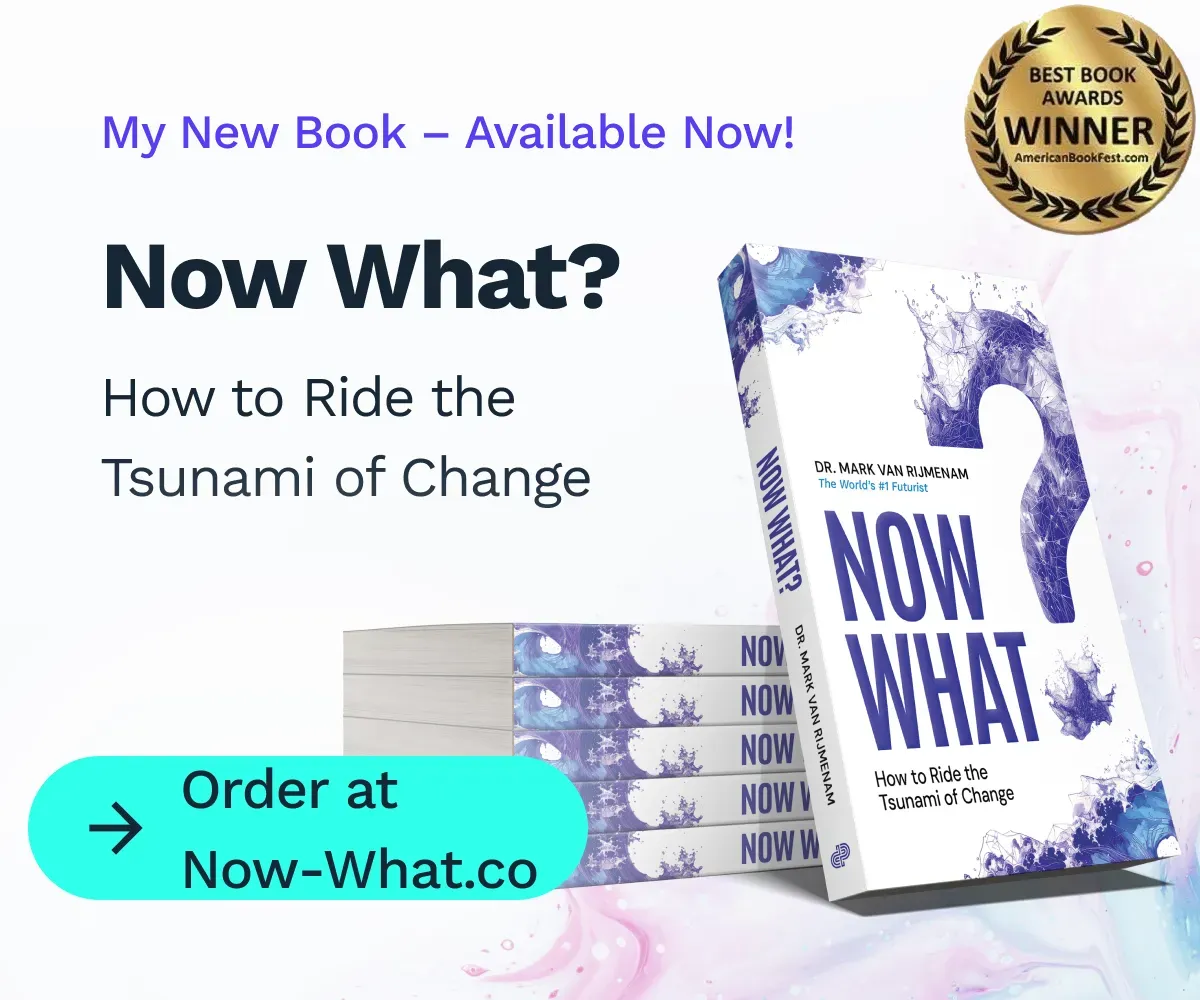
If you are interested in more insights, grab my latest, award-winning, book Now What? How to Ride the Tsunami of Change and learn how to embrace a mindset that can deal with exponential change, or download my news 2026 tech trends report:
If this newsletter was forwarded to you, you can sign up here.
Thank you.
Mark