Synthetic Minds | Medicine Is Turning Personal, One Patient at a Time

Synthetic Minds | Medicine Is Turning Personal, One Patient at a Time
The Synthetic Minds newsletter offers short daily insights to get you thinking. If you enjoy it, please forward. All signals are powered by Futurwise. If you need more insights, subscribe to Futurwise and get 25% off for the first three months!
I built the Intelligence Age Scorecard! It will help you understand how ready your organization is for the Intelligence Age.
Today’s topic: Health
Medicine Built for One, Not Millions
A cancer vaccine was built for one person, from the mutations in their own tumor. A surgeon removed a brain tumor with software marking the vessels a wrong move would cut.
Neither was a demonstration.
Medicine has stopped being made for populations and started being made for the person in the chair.
Moderna and Merck have reported that a personalized mRNA cancer vaccine, built individually from each patient's tumor and given with an immunotherapy, kept high-risk melanoma from returning in a trial of roughly 1,100 people. Software picks which targets to teach the immune system to hunt.
It is the first individualized mRNA cancer therapy to succeed in a late-stage trial, and doctors see a path to other tumors.
Surgeons in London have performed the world's first brain operation with live AI assistance, lifting a tumor while a model trained on hundreds of the same operations flagged hidden nerves and vessels as they worked.
And the FDA has cleared a blood test for Alzheimer's, moving a diagnosis that needed a brain scan or a spinal tap toward a draw scored in a lab.
That is the personalization story. Here is the signal.
For a decade the question in medicine was whether we could build the thing. Design the molecule. Edit the gene. Read the scan.
That question is mostly answered. The quieter shift is where the intelligence sits. It has moved out of the research lab and into the room where one patient is treated.
A vaccine is built for a single person. A model guides a single operation. A blood draw, scored by algorithm, tells one family what a brain scan and a specialist used to.
The advanced care that reached patients through the plainest hardware proved the reach. This proves the aim: care built, guided and read for the individual.
That is the opening, and it is the story. The hard part of medicine is no longer discovery. It is delivery: the manufacturing, the data, the payment and the trained hands that can serve care one patient at a time.
The last time production moved from the batch to the individual, in manufacturing, it rewrote which companies mattered. Medicine has started the same turn.
The shadow is real and worth designing around. A therapy made per person cannot be mass produced the old way. A cheap early answer creates demand the drugs, specialists and budgets behind it may not meet.
So the question a board should carry is not whether the science works. It is whether the organization is built for medicine made one patient at a time.
The cost of discovering medicine is falling. The cost of delivering it to one person at a time is the market nobody has built yet. Build it.
The Intelligence Age Scorecard
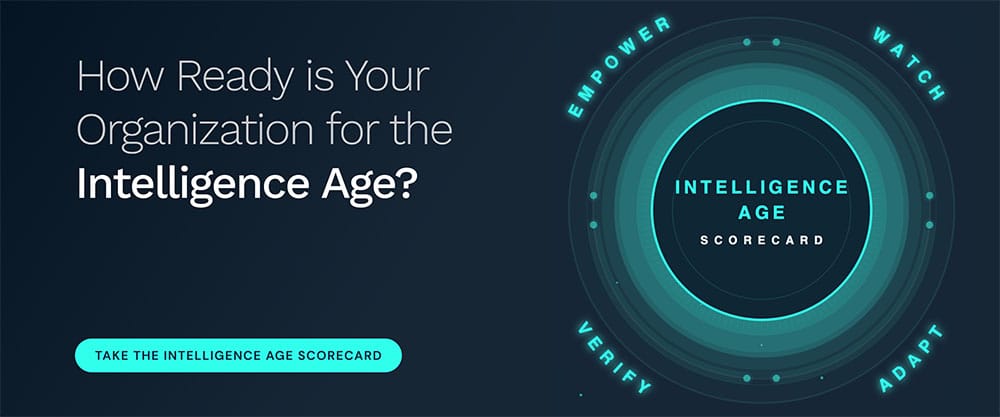
Medicine is being rebuilt around the single patient, and the constraint has shifted from discovering therapies to delivering them one person at a time. Under WAVE (Watch, Adapt, Verify, Empower), this is an Adapt moment: the assumption that care is mass produced is the one to revisit before you build your next decade of capacity.
Benchmark your readiness for the next two quarters, and the next five years, with the Intelligence Age Scorecard.
If this newsletter was forwarded to you, you can sign up here.
Thank you.
Mark
Frequently asked questions
What is the personalized mRNA cancer vaccine?
It is a cancer vaccine built individually from the mutations found in a patient's own tumor. Software selects which targets to teach the immune system to hunt. Moderna and Merck reported that this vaccine, given alongside an immunotherapy, kept high-risk melanoma from returning in a trial of roughly 1,100 people, making it the first individualized mRNA cancer therapy to succeed in a late-stage trial.},{
Link to this questionHow did AI assist in the London brain surgery?
Surgeons in London performed the world's first brain operation with live AI assistance. While lifting a tumor, a model trained on hundreds of similar operations flagged hidden nerves and vessels in real time, marking vessels where a wrong move would cut, helping guide the surgeon's actions during the procedure itself.
Link to this questionWhy does the shift to individualized medicine matter?
For a decade medicine focused on whether treatments could be built at all. That question is largely answered, and intelligence has now moved from the research lab into the room where a single patient is treated. This means the central challenge is no longer discovery but delivery: manufacturing, data, payment systems and trained hands capable of serving care one patient at a time.
Link to this questionWhat is the biggest risk of personalized medicine?
Because a therapy made for one person cannot be mass produced the old way, a cheap early success can create demand that the drugs, specialists and budgets behind it cannot meet. The real question for organizations is not whether the science works, but whether they are structured to deliver medicine made one patient at a time.
Link to this question
Dr Mark van Rijmenam
Dr. Mark van Rijmenam, widely known as The Digital Speaker, isn’t just a #1-ranked global futurist; he’s an Architect of Tomorrow who fuses visionary ideas with real-world ROI. As a global keynote speaker, Global Speaking Fellow, recognized Global Guru Futurist, and 5-time author, he ignites Fortune 500 leaders and governments worldwide to harness emerging tech for tangible growth.
Recognized by Salesforce as one of 16 must-know AI influencers , Dr. Mark brings a balanced, optimistic-dystopian edge to his insights—pushing boundaries without losing sight of ethical innovation. From pioneering the use of a digital twin to spearheading his next-gen media platform Futurwise, he doesn’t just talk about AI and the future—he lives it, inspiring audiences to take bold action. You can reach his digital twin via WhatsApp at: +1 (830) 463-6967.