Synthetic Minds | Davos Day 4: New Thinking or Social Whiplash

The Synthetic Minds newsletter is evolving. Short daily insights to get you thinking. If you enjoy it, please forward. If you need more insights, subscribe to Futurwise and get 25% off for the first three months!
Davos Day 4: New Thinking or Social Whiplash
Davos closed with a split-screen reality. It didn’t land on a neat AI narrative; it landed on a collision. The IMF called AI a labour “tsunami”, with young and entry-level workers most exposed. In the next room, the mantra was “jobs, jobs, jobs”, with leaders arguing that chips, energy, data centres, and automation will create the next employment boom.
Both can be true, and that’s the point. We keep trying to solve a systems problem with organizational habits: optimise the firm, squeeze the cost base, call it “transformation.”
Yesterday’s thinking treats this as a talent problem. If leaders treat this as a standard HR reskilling problem, they will get social whiplash. It’s a systems redesign. PwC’s message was blunt: don’t use AI to do the same work faster; rebuild how value is created.
Meanwhile, AI expands the attack surface faster than defenders can harden it, with 87% of cybersecurity leaders say AI-enabled vulnerabilities are now the biggest cyber risk, because capability is scaling faster than resilience.
Add Musk’s robot-saturated economy, with his prediction that humanoids will outnumber humans, and you get abundance for some and irrelevance for others unless we act. If labour stops being scarce, what replaces wages as the social organising principle?
New thinking means collaboration over competition: reskill at planetary scale, fund pathways for youth, and help the Global South leapfrog into capability rather than importing disruption without benefits.
The WEF’s Reskilling Revolution, which plans to impact 850M+ people, is the right direction, but it must become muscle, not marketing. DeepMind’s engagement with India is a glimpse of the future: multipolar co-design, not AI colonialism.
The future doesn’t reward comfort; it rewards clarity followed by action.
The old playbook optimizes firms. The new playbook stabilizes societies. What would you redesign first: education, social safety nets, or the economic rules that decide who shares in AI-driven abundance?

'Synthetic Minds' continues to reflect the synthetic forces reshaping our world. Quick, curated insights to feed your quest for a better understanding of our evolving synthetic future, powered by Futurwise:
1. Donald Trump's actions are a ticking time bomb for global stability and the US's relationships with its allies. (Wired)
2. The Trump administration's Department of Government Efficiency (DOGE) improperly accessed and shared sensitive personal data of millions of Americans, including Social Security data. DOGE employees secretly conferred. (NPR)
3. The rise of AI bot swarms poses a significant threat to democracy, as experts warn of the potential consequences of AI-driven disinformation campaigns. (The Guardian)
4. As humanoid robots become increasingly advanced, we're forced to confront the implications of a world where machines are capable of complex tasks and interactions. (Vox)
5. A professor at the University of Cologne lost 2 years of work due to a data deletion glitch by ChatGPT, including project folders and conversations, without any warning or recovery option. (Nature)
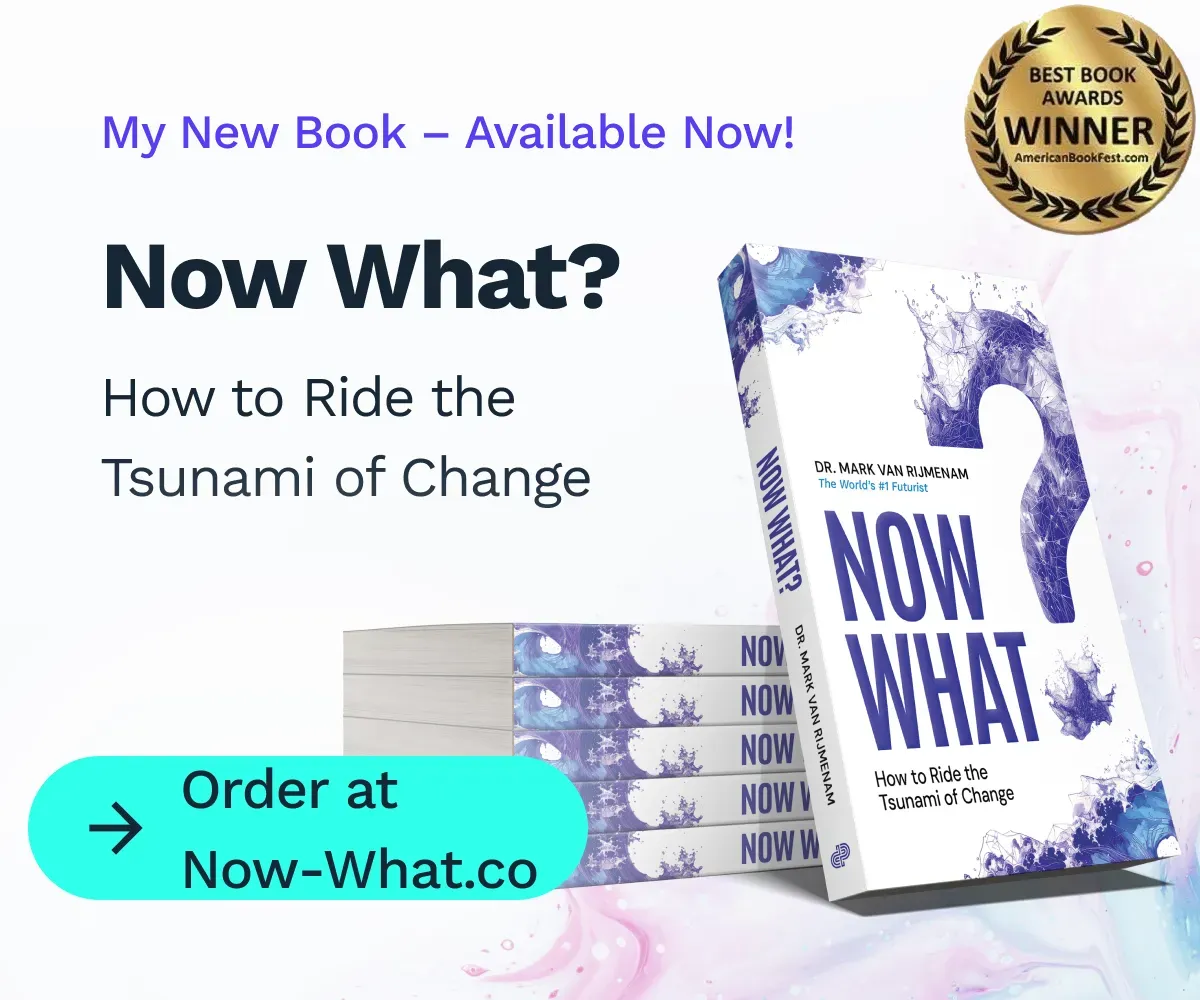
If you are interested in more insights, grab my latest, award-winning, book Now What? How to Ride the Tsunami of Change and learn how to embrace a mindset that can deal with exponential change, or download my news 2026 tech trends report:
If this newsletter was forwarded to you, you can sign up here.
Thank you.
Mark